
New Jersey Death Index
The New Jersey Death Index is a public resource for searching death records across the state. The index covers deaths from 1901 through 2017 and is kept by the New Jersey Department of Health and the State Archives in Trenton. You can search for a death record by name or year to find the date, place, and other facts tied to a death in New Jersey. Records are held at both the state and local level, giving you more than one way to look up the information you need. This page shows you how to find and get copies of death records from New Jersey sources.
New Jersey Death Index Quick Facts
Where to Search the New Jersey Death Index
New Jersey keeps death records at two main offices. The New Jersey Department of Health, Office of Vital Statistics and Registry holds death certificates from 1878 to the present. They run a walk-in center at 140 E. Front Street in Trenton for same day service. You can also mail a request or order through VitalChek by calling 877-622-7549. The state office registers all vital events and keeps a full index of every death on file in New Jersey.
The New Jersey State Archives holds older death records. Their collection has microfilm copies of death records from 1848 to 1963 that are open to the public. The Archives also runs a mail reference service for death records from May 1, 1848 through December 31, 1940. Researchers can visit the Archives at 225 West State Street, Level 2, in Trenton. Their searchable databases cover over 2,300,000 entries and grow each day as staff add new records to the New Jersey death index system.
The free New Jersey Death Index from Reclaim The Records is a searchable database with death index data from 1901 to 2017. This site was built using records obtained through the Open Public Records Act. It lets anyone search New Jersey death records by name at no cost.
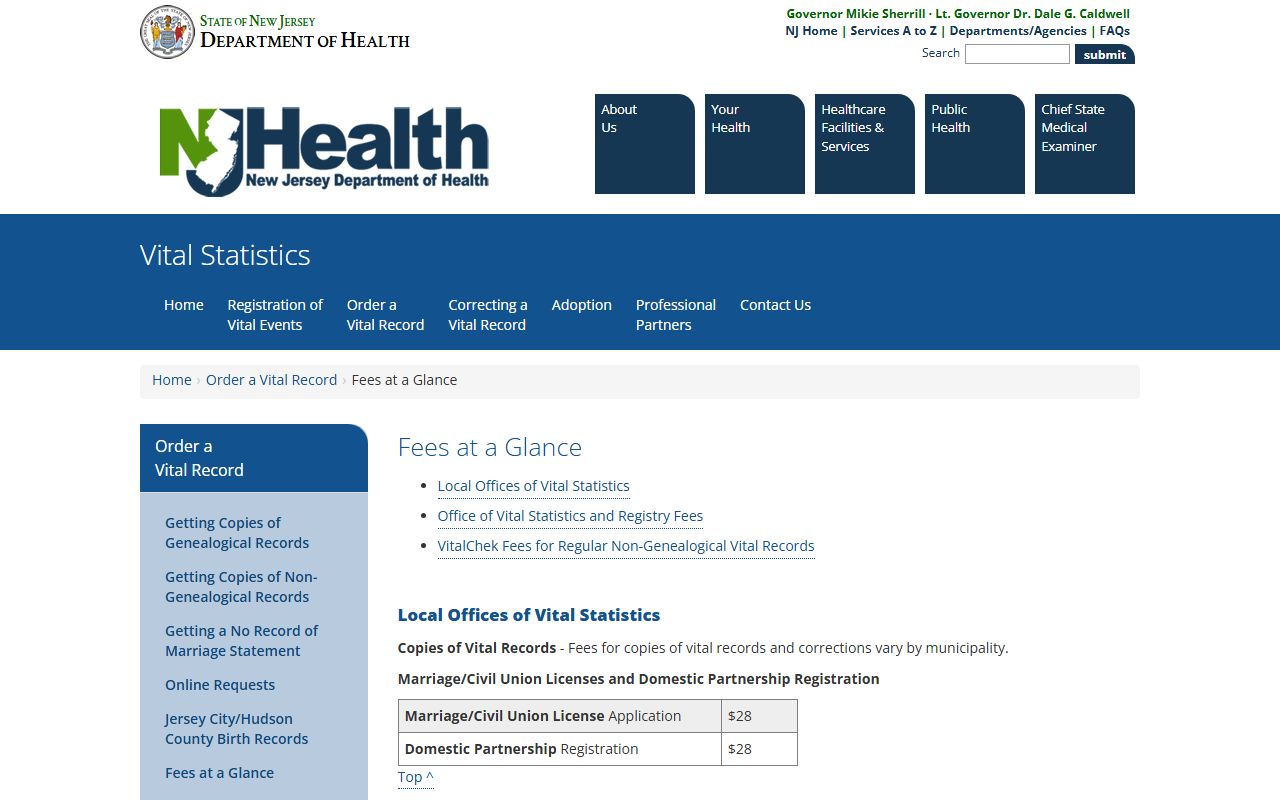
Note: New Jersey law says vital records are not public records and cannot be searched through a general online portal run by the state.
Death Index Coverage by Year
The New Jersey Death Index does not cover every year in one block. There are gaps in the data that came about when the Department of Health could not find certain index files. Knowing which years are in the index helps you plan your search. If a year is missing from the index, the actual death certificates may still exist on microfilm at the State Archives in New Jersey.
For deaths from 1848 to 1900, the State Archives holds the original records. These came from local registrars across New Jersey who were first required to file vital records in 1848. New Jersey was the second state in the country to require statewide death registration, right after Massachusetts. Early compliance was low, though, and many deaths before 1920 were not recorded at all. Under N.J.S.A. Title 26, local registrars must register all deaths in their area and send the originals to the State Registrar.
The free online death index has records for 1901 to 1903, 1920 to 1929, and 1949 to 2017. The years 1904 to 1919 are missing because the Department of Health could not find them even under an OPRA request. The years 1930 to 1948 are also not in the index for the same reason. For the 1920s, death records are grouped in five-year blocks and sorted by county or major city, then by year, then by last name. About half of the 1920 to 1924 block is also lost.
The Reclaim The Records project obtained roughly 96,000 death index entries for 1901 to 1903 alone. These are index entries, not the full certificates. You can order a copy of the actual certificate from the Archives for a small fee once you find a match in the New Jersey death index.
How to Get a New Jersey Death Certificate
A death certificate is the official record of a death in New Jersey. It shows the name of the person, the date and place of death, the cause of death, and the names of parents. The document is signed by the doctor who certified the death and the funeral director who filed it. The New Jersey Funeral Directors Association notes that a certified copy has a raised seal and is printed on state safety paper.
You can get a certified copy of a death certificate from the state or from a local registrar in New Jersey. The state fee is $25 for the first search and one certified copy. Each extra copy of the same record ordered at the same time costs $2. Make your check out to "Treasurer, State of New Jersey." You can order by mail, in person at the Trenton walk-in center, or online through VitalChek. Local municipal registrars in New Jersey also issue certified copies, and their fees vary by town.
Not everyone can get a certified copy. Under New Jersey law, a registrar may issue a certified death record only to the subject's parent, legal guardian, legal representative, spouse or civil union partner, child, grandchild, or sibling of legal age. State and federal agencies can also get copies for official purposes. A court order works too. For genealogical copies of death records older than 40 years, access rules are less strict. The cause of death and Social Security number may be hidden on those copies in New Jersey.
New Jersey State Archives Death Records
The State Archives is a key resource for older death records. They hold birth, marriage, and death records from May 1848 through December 1900. For death records specifically, they have microfilm copies all the way through 1963. The Archives Search Room is open to the public and located at 225 West State Street in Trenton, NJ 08625. You can also write to P.O. Box 307, Trenton, NJ 08625-0307, or call 609-292-4087 to ask about New Jersey death index records.
As of January 2009, the Department of Health moved all vital records through December 31, 1900 to the State Archives. Before that change, getting a copy of a pre-1901 death record from the Health Department was costly and slow. Now the Archives does lookups for $10 each. The NJGenWeb project notes that death certificates from 1904 to the present are filed by last name at the state level.
The Archives also holds many municipal vital records. Some towns gave their old registers to the Archives for safe keeping. Not all pre-1910 local records survived, but what does exist is now in one place. The Library of Congress guide to New Jersey vital records points researchers to the Archives as the first stop for any death record search in the state.
Note: The State Archives adds new database entries daily, so check back if you do not find a match on your first search of the New Jersey death index.
Local Registrars and Death Records in New Jersey
Each of the 565 municipalities in New Jersey has a local registrar of vital statistics. Under Section 26:8-25 of the state code, the local registrar must enforce the law on death registration, supply blank forms to funeral directors, check each certificate for errors, and send the originals to the State Registrar. They also issue burial permits.
When a death occurs in a New Jersey town, the local registrar in that town holds the record. You can contact the municipal clerk to ask if they have the death record you need. This is useful when you know the exact town but not the certificate number. Section 26:8-17 requires each local registrar to appoint a deputy who can act in their place. This means the office can process requests even when the main registrar is out.
The PublicRecords.com guide notes that death records are used for estate settlement, insurance claims, and genealogical research across New Jersey. If the local office does not have the record, they can direct you to the state office in Trenton.
Genealogy Research With the Death Index
The New Jersey Death Index is widely used for family history research. Death records can reveal parents' names, birthplaces, and last known addresses. For records before 1878, the certificates show the names of parents, the exact date of death, and the age at death. Records from 1878 to 1900 may show parents' names on the certificate but not on the register, which gives only the month and year of death, age, and each parent's birth country.
Several free databases help with death record research in New Jersey. FamilySearch has indexes for New Jersey deaths and burials from 1720 to 1988. Ancestry has a New Jersey deaths and burials index for 1798 to 1971. The Reclaim The Records death index covers 1901 to 2017 with free online access. The State Archives also has online databases with images for some death index years in New Jersey.
For death records before 1848, there are no statewide civil records. You would need to check church records, family Bibles, cemetery listings, or probate files. Counties were required to file marriage returns starting in 1795, but death registration did not begin until 1848 in New Jersey. Some church and cemetery records go back to the 1600s.
Browse the New Jersey Death Index by County
Each county in New Jersey has its own set of death records held by local registrars and the county clerk. Pick a county below to find resources for death records in that area.
Death Index Records in Major New Jersey Cities
Residents of major cities can search death records through their local registrar or the state office. Pick a city below to learn about death index resources in that area.