
Warren County NJ Death Index Records
The Warren County death index covers records from 1901 through 2017. Warren County was formed in 1824 from Sussex County. Belvidere serves as the county seat. The county clerk and surrogate both work from 413 Second Street in Belvidere. Death records here date back to the mid-1800s. The state began collecting vital records in May 1848. Local clerks in all 22 municipalities also handled death filings for their towns. This guide shows how to search the death index and where to find old records in Warren County.
Warren County Death Index Facts
Warren County Clerk Death Index Office
The Warren County clerk is the main source for death records in this area. The office sits at 413 Second Street in Belvidere, NJ 07823. Staff can help you search the death index. They keep files on deaths, land sales, and court cases. Marriage and land records go back to 1825. Court and probate files start from that same year.
You can visit the clerk in person to look up the death index. Bring a valid ID. Staff will search by name or date for you. Copies cost a small fee. Call first to check hours. The clerk can tell you what forms you need. They also handle mail requests for death index searches in Warren County.
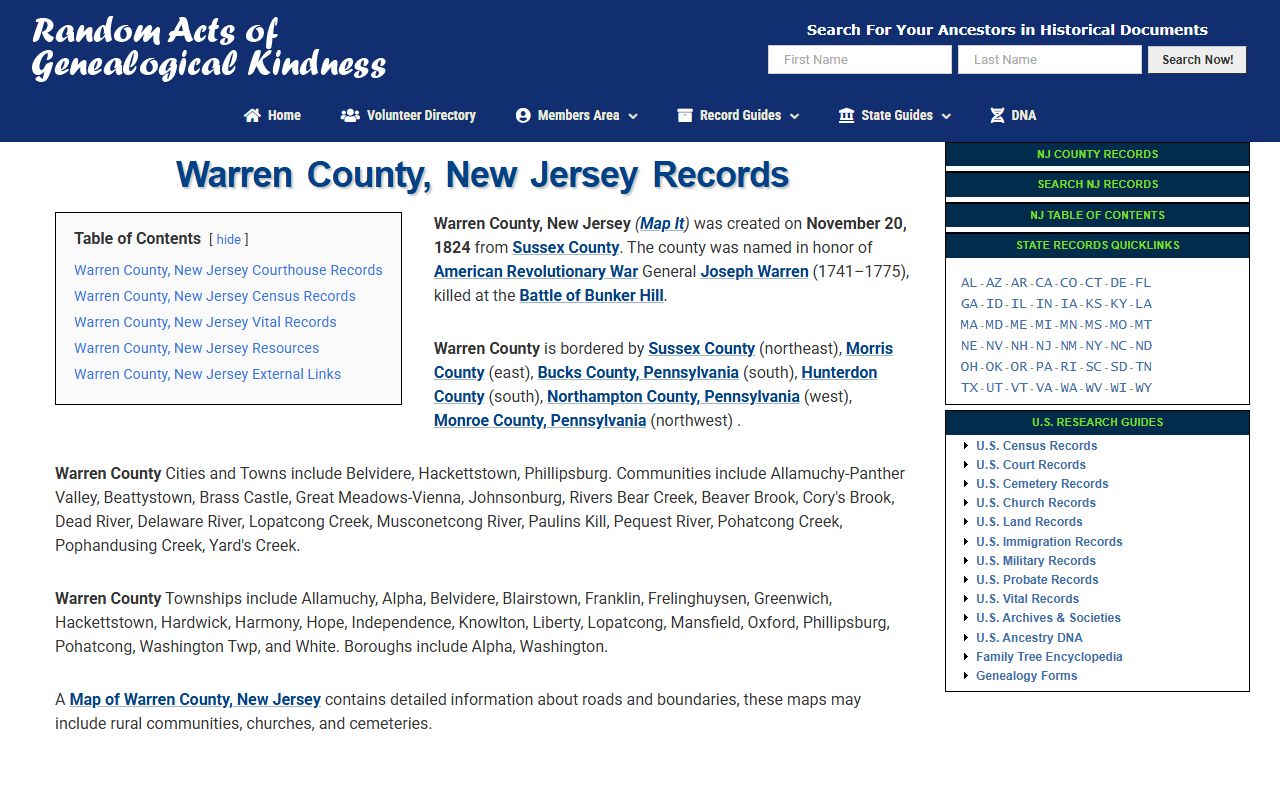
The Random Acts of Genealogy Kindness page for Warren County lists local volunteers who may assist with lookups in the death index.
The clerk office is a good first stop for recent death records in Warren County. For older records, you may need to check the state archives or local historical groups.
| Office |
Warren County Clerk 413 Second Street Belvidere, NJ 07823 |
|---|---|
| Records | Death index, marriage, land, court, and probate records from 1825 |
| Website | raogk.org - Warren County |
Warren County Death Index Date Ranges
The death index for Warren County does not cover every year in one block. Gaps exist in the data. The known ranges are 1901 to 1903, 1920 to 1929, and 1949 to 2017. Each range holds names, dates, and basic facts about the deceased. The early years have less detail. Later records tend to include more data.
The 1901 to 1903 span is short. It holds just three years of death index entries. These are some of the first typed lists for the county. Names may be spelled in old ways. Check for variants when you search.
The 1920 to 1929 block adds ten more years. This decade saw growth in Warren County. Deaths from flu, farm work, and old age fill these pages. The death index from this era helps trace families who lived in the rural parts of the county.
The largest set runs from 1949 to 2017. This block spans close to seven decades. It covers the bulk of modern death records in Warren County. Most family research can start here. The death index for these years is the most complete and the most used.
Note: The gap from 1904 to 1919 and from 1930 to 1948 means those years are not in the standard death index. Check the New Jersey State Archives search portal for records from those missing years.
Death Index at New Jersey State Archives
The New Jersey State Archives holds death records from May 1848 through December 1914. This covers Warren County and all other counties in the state. These records fill in the gaps left by the county death index. If you need a death record from 1848 to 1900, the state archives is your best source.
The archives sit in Trenton. You can visit in person or request records by mail. Staff can search by name, date, or town. Fees apply for copies. The archives also hold census data, military rolls, and other files that pair well with death index research for Warren County.
For online access, use the state archives search tool. It lets you look up names and dates from home. Not all records are scanned yet. Some searches may still need an in-person visit. The archives staff can guide you to the right set of records for Warren County deaths.
Note: State archive records from 1848 to 1914 overlap with the 1901 to 1903 block in the Warren County death index. Cross-check both sources for the most complete picture.
Warren County Municipal Death Records
Warren County has 22 towns and boroughs. Each one has a local clerk. These clerks also process vital records. Deaths that took place in a given town were first logged by that town clerk. The records then went to the county and state levels. For some old deaths, the town clerk may have the only copy.
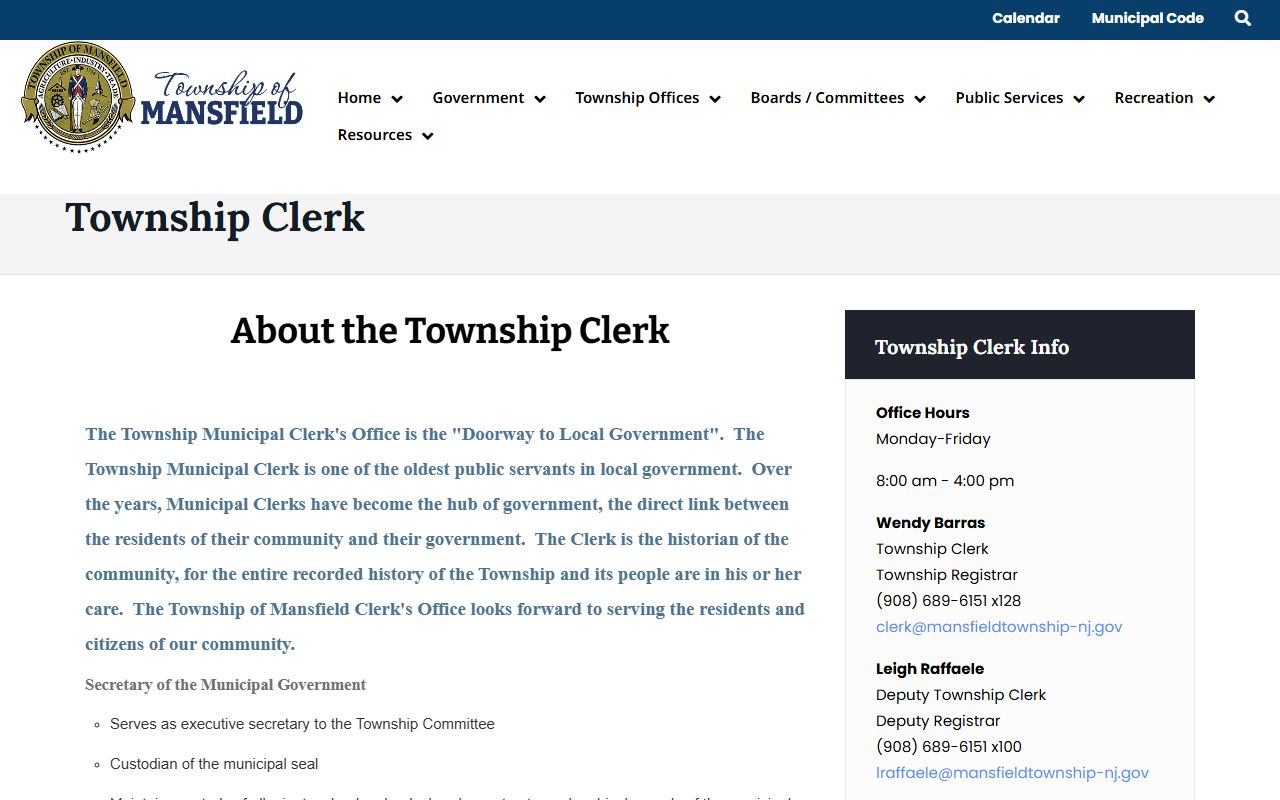
The Mansfield Township Clerk is one such local office. It handles vital statistics for Mansfield residents. Other towns in Warren County run similar offices. Each one keeps its own set of death filings.
If the county death index does not have what you need, try the local clerk. They may hold records not yet added to the main index. Town clerks can also point you to other local sources. Small towns often kept detailed logs of births, deaths, and marriages long before the state required it.
Contact the clerk in the town where the death took place. Ask what years they cover. Some towns have records from the mid-1800s. Others only go back to the early 1900s. Fees for copies vary by town across Warren County.
How to Search the Death Index
Searching the Warren County death index takes a few steps. Start with the name of the person. Use the full legal name if you can. Nicknames and short forms may not match. Try both the married name and birth name for women. Spelling shifts are common in older records.
Next, narrow by date. If you know the year of death, that helps a lot. Even a rough range like "1950s" can cut the results down. The death index is sorted by year in most cases. A date range speeds up the search.
You can search the death index through these methods:
- Visit the Warren County clerk in Belvidere
- Mail a written request with the name and date range
- Use the New Jersey Death Index site for online lookups
- Check the state archives search for pre-1915 deaths
- Contact the local town clerk where the death took place
Each method has pros and cons. In-person visits let you browse wide date ranges fast. Mail takes a week or more. Online tools work from home but may not have every year. Pick the one that fits your time and needs for the Warren County death index.
Note: When you search the death index online, results may show just a name and date. For full details, you still need to order a copy of the actual death record from the county or state.
Warren County Death Record Copies
Once you find an entry in the death index, you may want a full copy. The county clerk can issue copies of death records on file in Warren County. Certified copies cost more than plain ones. Certified copies carry a raised seal. They work for legal uses like settling an estate or claiming benefits.
The New Jersey vital records fee page lists the current costs. A certified copy of a death record from the state costs $25. Each extra copy at the same time is $2 more. Warren County may charge its own fee for local copies. Call the clerk to confirm the price.
You can also order death records from the NJ Department of Health. They handle vital records for the whole state. Mail your request to the Office of Vital Statistics in Trenton. Include the full name, date of death, and your return address. Payment must come with the request. Allow two to four weeks for processing.
For older death records not found in the standard death index, try the state archives genealogy collection. They hold records from 1848 onward. These are not always the same as vital statistics copies. They may be church logs, town books, or other primary sources from Warren County.
Warren County Historical Society Resources
The Warren County Historical Society runs the Shippen Manor Museum. They hold local history files, old maps, and family papers. These can add context to death index findings. A name in the death index becomes a full story when you pair it with local records.

The society keeps files on old families, churches, and burial grounds in Warren County. Cemetery records often list death dates, ages, and family ties. These match up well with the death index. If a record is missing from the index, a grave marker or church log may fill the gap.
Volunteers at the historical society can help with research. They know the local sources well. Many have deep roots in Warren County. Their knowledge of town names, family lines, and old roads makes them a strong resource for death index work.
Death Index Legal Rules in New Jersey
New Jersey law governs who can get death records and how they are kept. Title 26 of the New Jersey statutes covers vital statistics. It sets the rules for filing, storing, and sharing death records. The law applies to all 21 counties, including Warren County.
Death records in New Jersey are not fully open to the public right away. Recent records have limits on who can get a copy. Close family, legal agents, and those with a direct need can request them. Older records are more open. The death index itself is a public tool. It shows names and dates but not the full record.
The state registrar sets standards for local clerks. Each clerk in Warren County must follow these rules. They must file death reports within set time frames. They must keep records safe and in good order. Failure to do so can lead to fines or loss of the clerk role.
For research, the death index is the starting point. It tells you a record exists. The full record holds the cause of death, place of death, and other facts. To get that full record, you must meet the legal rules for access in Warren County.
Nearby Counties
These counties sit next to Warren County. If a death took place near the border, check the next county too. People sometimes died in a town just across the line. The death index for each county is kept on its own.